The Queen City Scoop
Latest News
|The Queen City Scoop
Latest News

Subscribe

NC Is 270 Troopers Short

|

The Queen City Scoop

Archives

NC Is 270 Troopers Short

SIGN UP FOR OUR NEWSLETTER

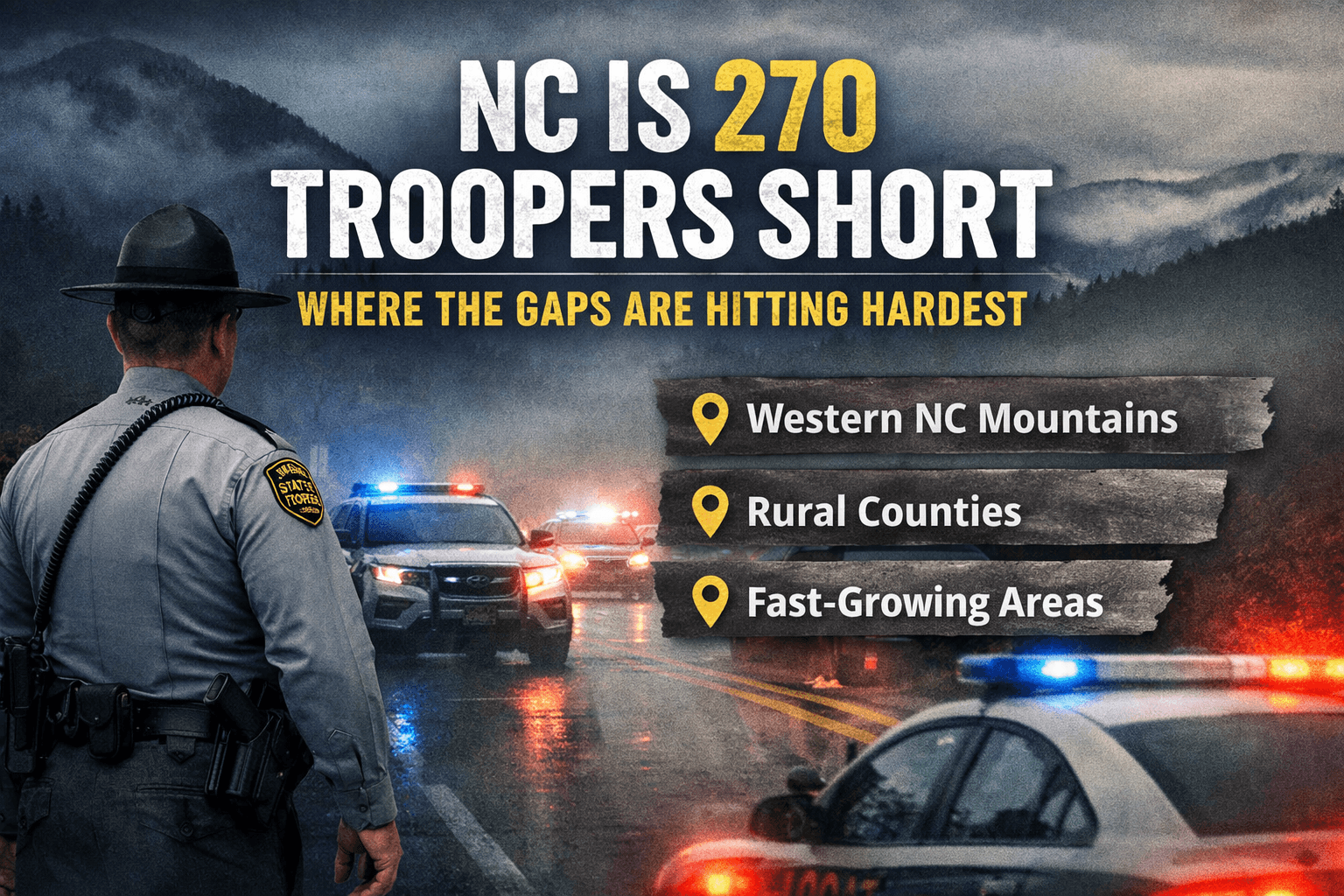
NC Is 270 Troopers Short. Here’s Where the Gaps Are Hitting Hardest

A statewide trooper shortage is creating uneven public safety, with the biggest gaps in Western NC, rural counties, and fast growing corridors.

A viral claim is making the rounds: North Carolina is missing 270 state troopers.

It sounds dramatic.

But it’s not exaggerated.

It’s a real number and it points to a deeper issue.

This isn’t just a hiring problem.

It’s a growing public safety gap… and it’s hitting rural roads, mountain highways, and fast-growing areas the hardest.


What “270 Missing Troopers” Actually Means

The North Carolina Highway Patrol has been operating with roughly 200 to 270 open positions over the past few years.

At one point, that represented about 14% of the entire force.

More recent numbers still show around 220 vacancies, meaning the problem hasn’t gone away.

At the same time, the state has:

  • More people moving in
  • More drivers on the road
  • More traffic across highways and rural routes

But not more troopers.


Where the Shortage Is Worst

The gaps aren’t evenly spread across the state.

Some areas are feeling it much more than others.


Western North Carolina (Mountains)

Troop G, covering the 17 westernmost counties, has about 31 open positions.

That is roughly one sixth of its total staffing.

One out of every six patrol positions missing in a region known for:

  • Winding mountain roads
  • Heavy tourism traffic
  • Long distances between towns

That is where response times stretch the most.


Rural North Carolina

Many of the hardest-to-fill roles are in rural counties.

Troopers can be assigned anywhere in the state, sometimes far from where they live or want to live.

That makes recruitment harder and retention even harder.


Fast Growing Areas

North Carolina is booming.

Traffic is growing faster than patrol coverage.


Why NC Is Short Hundreds of Troopers

This did not happen overnight.

Several factors are driving the shortage, and they all connect.


1. Pay That Does Not Compete

Starting pay is around $55,000.

Top pay reaches just over $80,000 after several years.

North Carolina ranks around 45th nationally, more than a $20,000 gap compared to other states.


2. Losing Troopers to Other Departments

Troopers are leaving for better paying agencies, including:

  • Charlotte-Mecklenburg Police Department
  • Out-of-state agencies like Florida Highway Patrol

Same job. Better pay. Better benefits.


3. Benefits That Do Not Stretch as Far

Changes to retirement benefits and rising healthcare costs have made the job less attractive over time.

For many recruits, the long term value does not add up anymore.


4. Lifestyle Challenges

Being a trooper is not a 9 to 5 job.

It is nights, weekends, and holidays.

Assignments can be anywhere in the state, which is a tough sell for families.


5. Budget and System Issues

Some agencies have left positions open to cover costs like:

  • Fuel
  • Equipment
  • Vehicle maintenance

This is not just a trooper issue. It is a broader staffing problem across state government.


What This Means on the Road


Fewer Troopers Per Mile

The same number of troopers covering more people, vehicles, and roads.

That means thinner coverage everywhere.


Less Proactive Policing

Priorities shift to:

  • Crashes
  • Emergency calls
  • Major incidents

Leaving less time for:

  • Speed enforcement
  • Routine patrols
  • Preventative stops

In other words, less prevention.


Slower Response Times

If the nearest trooper is counties away, help takes longer to arrive.


More Pressure on Local Police

Local agencies are picking up the slack while facing their own shortages.


What the State Is Doing About It


Community College Pipeline

Recruits can train locally, get paid during training, and enter the force faster.


Paid Cadet Programs

Cadets earn full pay and benefits while training and begin building retirement credit immediately.


New Academy Classes

New graduates are being added, but vacancies remain in the hundreds.


The Bigger Question

Recruiting helps, but it does not solve the core issue.

If pay, benefits, and lifestyle do not compete,

the state will keep training new troopers only to lose them to better opportunities.

A system struggling to keep up.


Why This Matters for North Carolina

More drivers.
More traffic.
More demand for safety.

But not enough coverage to match it.

And unless something changes, that gap will keep growing.


How You Become a North Carolina State Trooper

The path is more structured than most people think:

Step 1: Start with Basic Law Enforcement Training (BLET)
Enroll at a North Carolina community college and complete the required law enforcement certification program.

Step 2: Apply to the NC State Highway Patrol
Once eligible, apply to become a cadet. Some programs now allow you to get paid while completing training.

Step 3: Attend Basic Patrol School
Recruits go through the Highway Patrol’s academy, which includes physical training, driving, law, and field preparation.

Step 4: Graduate and Get Assigned
New troopers are assigned to a county across North Carolina, where they begin active patrol duties.

Learn more:

The Queen City Scoop

© 2026 The Queen City Scoop.

The Queen City Scoop is your daily source for everything happening in Charlotte, North Carolina. From the latest local news and community stories to must-attend events and small business spotlights, we’ve got you covered. Whether you’ve called Charlotte home for years or you’re new to town, The Queen City Scoop keeps you connected with the pulse of this vibrant city.

© 2026 The Queen City Scoop.

THIS PUBLICATION SPONSORED BY